Why EPIDIOLEX?
LGS results
Results for people living with Lennox-Gastaut syndrome (LGS)
at age 30 | living with LGS

Seizure reduction study results in Lennox‑Gastaut syndrome (LGS)
Fewer seizures in people living with LGS
EPIDIOLEX significantly reduced drop seizures in people living with LGS. Monthly drop-seizure* reduction over the 14-week treatment period.
EPIDIOLEX
10 mg/kg/day dose
EPIDIOLEX
20 mg/kg/day dose
In the placebo group
In another study, there was a 44% monthly reduction in drop seizures among patients taking EPIDIOLEX in the 20 mg/kg/day group, compared with a 22% reduction taking placebo.

With EPIDIOLEX, freedom from drop seizures is possible for some
4% of people taking EPIDIOLEX 20 mg/kg/day (compared with 0% of people taking placebo) reported no drop seizures.
In another study, 4% of people taking EPIDIOLEX 10 mg/kg/day and 7% who took EPIDIOLEX 20 mg/kg/day (compared with 1% of people taking placebo) reported no drop seizures.†
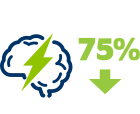
Substantial reduction in drop seizures
3x more people living with LGS saw a substantial reduction of 75% or greater in their drop seizures with EPIDIOLEX 10 mg/kg/day (11%), compared with placebo (3%).
*Drop seizures included tonic, atonic, and tonic-clonic that led, or could have led, to a fall or injury.
†During the 12-week maintenance period.

See real LGS stories from people in the EPIDIOLEX community
How was EPIDIOLEX studied in LGS?

Nearly 400 participants
Nearly 400 people with LGS took part in 2 clinical studies—the largest placebo-controlled, clinical study program of LGS to date.
Even after these trials were completed, the majority of people continued taking EPIDIOLEX for more than a year.

Included patients who failed on several medicines
EPIDIOLEX clinical trials included people who had typically failed on 4-6 prior antiseizure medicines.
These people were typically also taking 3 antiseizure medicines at the time, but their seizures were still uncontrolled.
Most common side effects
The most common side effects of EPIDIOLEX include increase in liver enzymes, sleepiness, decreased appetite, diarrhea, fever, vomiting, feeling very tired and weak, rash, sleep problems, and infections.
Real LGS stories from the EPIDIOLEX community

Meet Steven (LGS)
Steven’s childhood was tough for the whole family, as seizures dominated their lives. In his 20s, Steven was finally diagnosed with LGS, which led him to start EPIDIOLEX. As Steven’s seizures became less frequent, he was able to move to a supported living facility where he’s able to gain some independence.
“Before, we really had to rotate around his schedule, but now he gets up in the morning—we are on the go, and it’s a wonderful place to be.”


Meet Aaron (LGS)
Relentless seizures and unanswered questions left Aaron and his family secluded for nearly 20 years. It wasn’t until age 19 that Aaron was finally diagnosed with LGS. Since being on EPIDIOLEX, Aaron has seen a reduction in seizures which lets him and his family be more social and active together.
"To be where we’re at today is quite a blessing that we didn’t expect."


View the results of EPIDIOLEX in people living with LGS
View LGS results
Meet Cameron (LGS)
At 4 years old, Cameron was diagnosed with LGS, putting him in a relentless cycle of seize and sleep. With EPIDIOLEX, Cameron and his family notice less seizures and experience more loving family moments.
“Every day we’re surprised by Cameron and his potential. It just gives me such joy now.”

Full playlist




Ready to talk to your doctor about EPIDIOLEX?
Common questions
Clobazam, valproate, lamotrigine, and levetiracetam.
At 20 mg/kg/day doses, there was a somewhat greater reduction in seizure rates than with 10 mg/kg/day doses; however, there was also an increase in EPIDIOLEX side effects.
With EPIDIOLEX,
59%
of caregivers reported an improvement in their loved one’s overall condition on the Subject/Caregiver Impression of change (S/CGIC) scale.*
With placebo,
35%
of caregivers reported an improvement in their loved one’s overall condition on the scale.*
*The S/CGIC is a 7-point scale that ranges from “Very Much Improved” to “Very Much Worse,” evaluating patient or caregiver assessment of the patient’s overall condition from the beginning of the study to the end of the study.
EPIDIOLEX has been used by families for over 7 years. 4 clinical studies have established the clinical efficacy of EPIDIOLEX. Some people who stayed on EPIDIOLEX after those initial studies joined an extension phase and experienced continued seizure reduction.

Want to hear more about EPIDIOLEX?
Hear Greg, a fellow caregiver, connect with a real doctor and a Nurse Navigator about EPIDIOLEX.
Ready to talk to your doctor about EPIDIOLEX?
Use the Appointment Preparation Tool to help you make the most of your next doctor's appointment.